Understanding the Causes Helps CAI Reduce the Risk of Early & Unexpected Failures
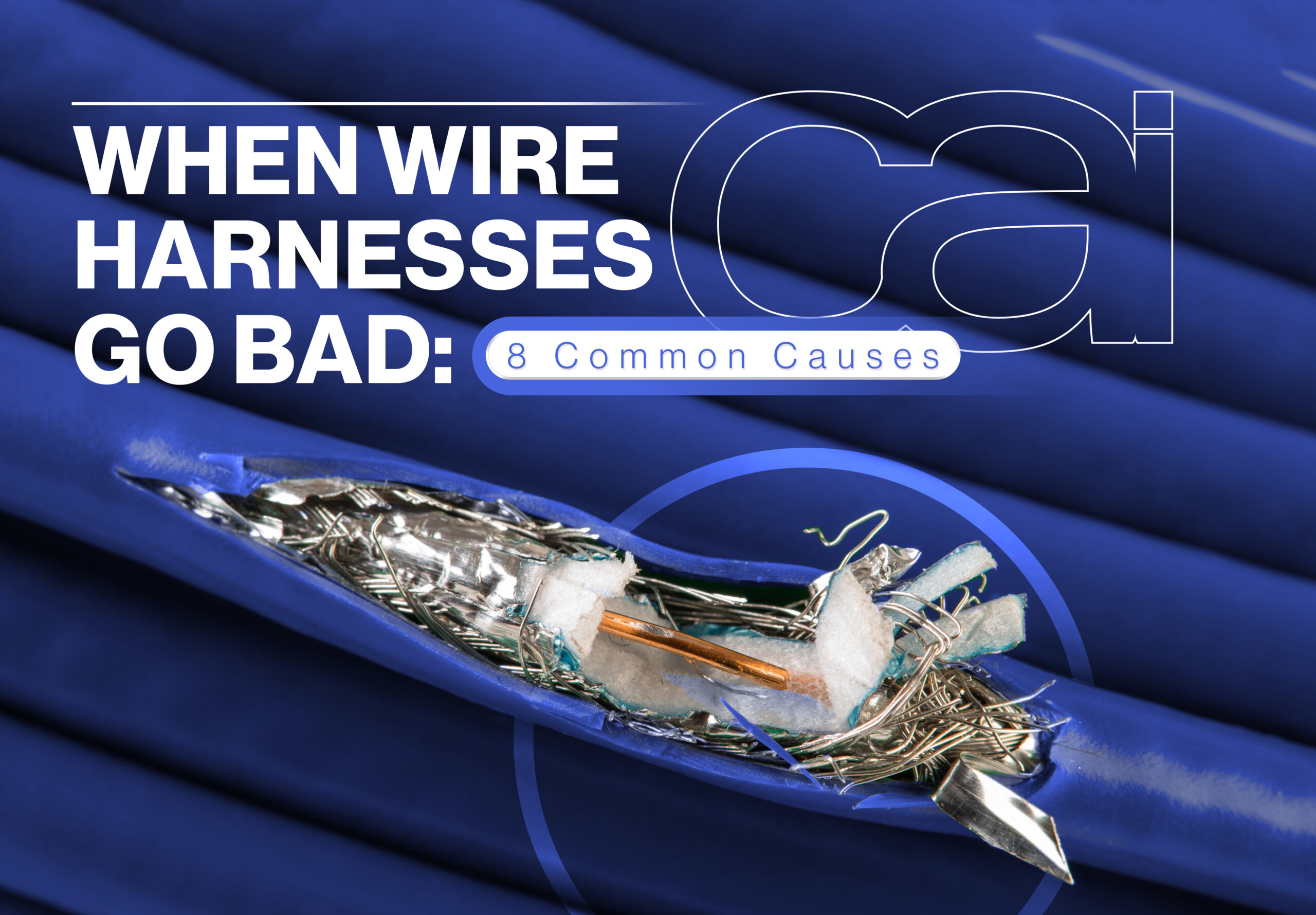
Wire harnesses play a critical role in nearly every modern electrical system. Found in vehicles, HVAC equipment, industrial machinery, medical devices, and countless other applications, they organize and protect electrical wiring while delivering power and signals where they’re needed. Because they’re often hidden from view, wire harnesses tend to be overlooked; that is, until something stops working.
When a wire harness fails, the problem can be difficult to diagnose and expensive to repair. Understanding why wire harnesses go bad helps technicians, engineers, and equipment owners recognize warning signs early and reduce the risk of unexpected failures.
1. Thermal Stress
Heat is one of the most common and destructive forces acting on wire harnesses. Prolonged exposure to high temperatures gradually breaks down wire insulation, causing it to harden, crack, or melt. This degradation exposes conductors and increases the risk of shorts, arcing, and electrical leakage.
Thermal stress is especially problematic in environments where temperatures fluctuate frequently. Repeated heating and cooling cycles cause materials to expand and contract, accelerating wear and fatigue. Even insulation rated for high temperatures can fail prematurely if it operates near its limits for extended periods.
2. Mechanical Wear
Most wire harnesses are installed in systems that move, vibrate, or operate continuously. Over time, vibration and motion place mechanical stress on both the wires and their insulation. Harnesses that rub against brackets, frames, or sharp edges slowly wear down, eventually exposing bare conductors.
Repeated flexing is particularly damaging near connectors and bend points. Internal copper strands can fracture even when the outer insulation appears intact, leading to intermittent electrical issues that are notoriously hard to trace.
3. Moisture Corrosion
Water can enter a harness through damaged insulation, poorly sealed connectors, or simple condensation caused by temperature changes. Once inside, moisture leads to corrosion of copper conductors and terminals.
Corrosion increases electrical resistance, weakens connections, and disrupts signal integrity. In severe cases, corrosion can completely sever electrical paths. Environments that involve salt, road chemicals, or industrial contaminants greatly accelerate this process and shorten harness life.
4. Chemical Exposure
Wire harnesses are often exposed to oils, fuels, solvents, and cleaning chemicals. Not all insulation materials are compatible with every substance, and prolonged exposure can cause insulation to soften, swell, or deteriorate.
As insulation degrades, it loses its protective properties and becomes more susceptible to cracking and abrasion. Chemical damage also increases the likelihood of shorts and electrical interference, particularly in sensitive control or sensor circuits.
5. Poor Design or Construction
In some cases, wire harness problems begin long before the equipment is ever put into service. Poor design or low-quality construction can significantly shorten a harness’s lifespan. Examples include undersized wire gauges, insulation materials that are not suited for the operating environment, and inadequate protection against heat, vibration, or moisture.
Improper crimping, inconsistent manufacturing processes, and substandard connectors introduce weak points that may fail early. A harness that lacks proper strain relief or protective sleeving is far more vulnerable to everyday stresses, even under normal operating conditions.
Design shortcuts made to reduce cost can result in harnesses that function initially but degrade quickly, leading to repeat failures and costly downtime.
6. Connector Degradation
Connectors are among the most common failure points in wire harness assemblies. Because they serve as connection and disconnection points, they are more exposed to vibration, dirt, and moisture than the wires themselves.
Over time, terminals can loosen, pins can bend, and connector housings can become brittle. Corrosion inside connectors further degrades electrical performance, often causing intermittent faults that worsen as the damage progresses.
7. Material Breakdown
Even under ideal conditions, wire harnesses are not permanent. All materials age. Insulation loses flexibility, plastics become brittle, and metal conductors fatigue. As equipment gets older, the cumulative effects of heat, vibration, and environmental exposure eventually lead to failure.
Many harness issues appear suddenly after years of reliable service because materials have reached the end of their useful life, not because of a single catastrophic event.
8. Electrical Overload & Improper Repairs
Electrical overloads place excessive stress on wires by forcing them to carry more current than they were designed for. This leads to overheating and accelerated insulation breakdown. Overloads often occur when equipment is modified, accessories are added, or incorrect fuses are installed.
Improper repairs can be just as damaging. Poor splices, mismatched wire sizes, and low-quality connectors create resistance and heat, forming weak points that fail sooner than the original harness.
The Cost of Wire Harness Failure
When a wire harness goes bad, the symptoms can be confusing and unpredictable. Power loss, erratic sensor readings, intermittent shutdowns, and unexplained system errors are all common. Left unresolved, these issues can escalate into safety hazards, equipment damage, or extended downtime.
While wire harnesses will eventually wear out, thoughtful design, quality construction, proper routing, and routine inspection can greatly extend their service life. Addressing heat, moisture, and mechanical stress early helps prevent small issues from turning into major failures.
For 40 years, CAI has provided countless clients and industries across the globe with the superior design and construction to mitigate the many risks of wire harness failure. To ensure your wire harnesses can stand the tests of time and environment, talk to us today about your unique electrical needs and we’ll help you bring your vision to life to your utmost satisfaction.